"Plant-Based Deodorant F-118 DC"
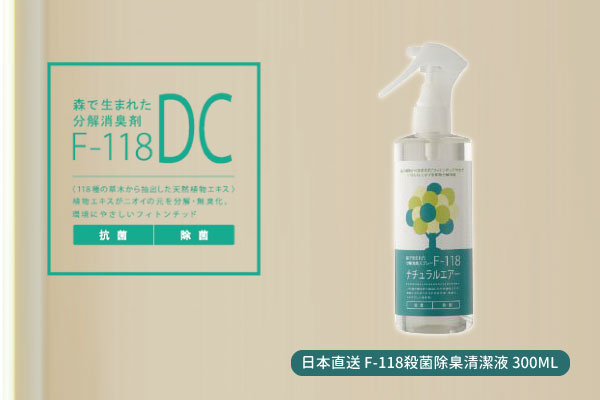
Plant-Based Deodorant F-118 DC is a plant-based deodorant made from plant extracts.
Plant extracts not only have deodorizing, antibacterial, bactericidal, and antifungal properties, but are also known as "plant bactericides" and have a refreshing effect.
It mainly consists of liquid vapor extracted from plants, making it safe and harmless.
Unlike previous F-118 liquids, it has a refreshing [herbal] fragrance.
[What is F-118?]
A blend of plant extracts purified through carbonization and distillation from over 100 plants.
It is a decomposition-type deodorant that decomposes and deodorizes with a unique formula, rather than masking odors through natural purification. F-118 is named as such because the plant type used for each plant characteristic analysis is 118.
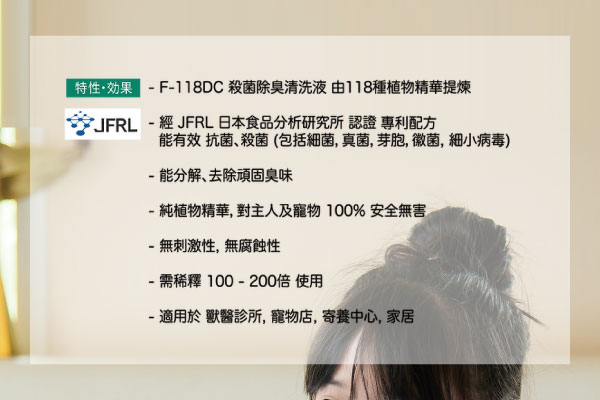
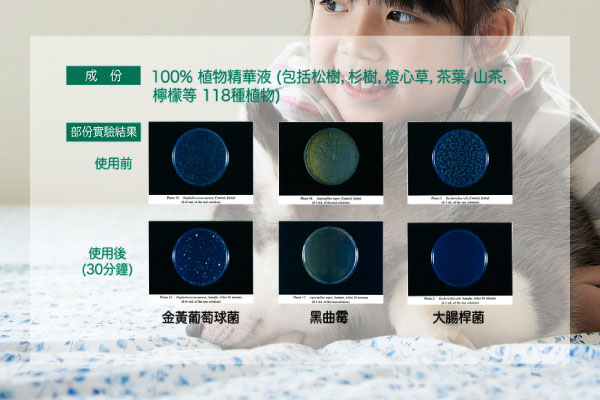
Deodorizing, Disinfecting, Antifungal - Test Results from the Japan Chemical Analysis Center:
This bactericidal and deodorizing cleaning liquid is a deodorant made from plant extracts. Not only does it deodorize and kill bacteria and fungi, it's also known as a "plant bactericide," providing a refreshing deodorizing effect. The bactericidal and deodorizing cleaning solution's main ingredient is plant [Kun Solution] extract, which is safe and harmless.
Usage: Spray directly on the areas, items, and pets requiring disinfection.
No rinsing required, non-irritating.
Ingredients:
100% plant extracts (including 118 kinds of plants such as pine, cedar, rush, tea, camellia, lemon, etc.)
Suitable for the following items and places:
Toilets, kitchen waste, household waste, landfills, cabinets, dog and cat odors, pet odors, etc.
Hotels, pet shops, karaoke bars, restaurants, beauty salons, meat, fresh fish, building materials and paint odors,
Hospitals (hospital wards, operating rooms, bathrooms, medical waste disposal, etc.), sanatoriums, rehabilitation centers, medical laboratories, etc.
Food processing plants, chemical plants, printing plants, paint shops, feed and fertilizer plants, textile and leather factories, pulp mills, etc.
Grain silos, slaughterhouses for cattle, pigs, and chickens, meat processing plants, organic fertilizer fermentation tanks, etc.
Waste incineration plants, human waste treatment plants, sewage treatment plants, sewage treatment facilities, waste collection centers, etc.
Offices (meeting rooms, reception rooms, warehouses, waste storage, etc.), construction sites, etc.